
Where Do You Play?
And why that matters

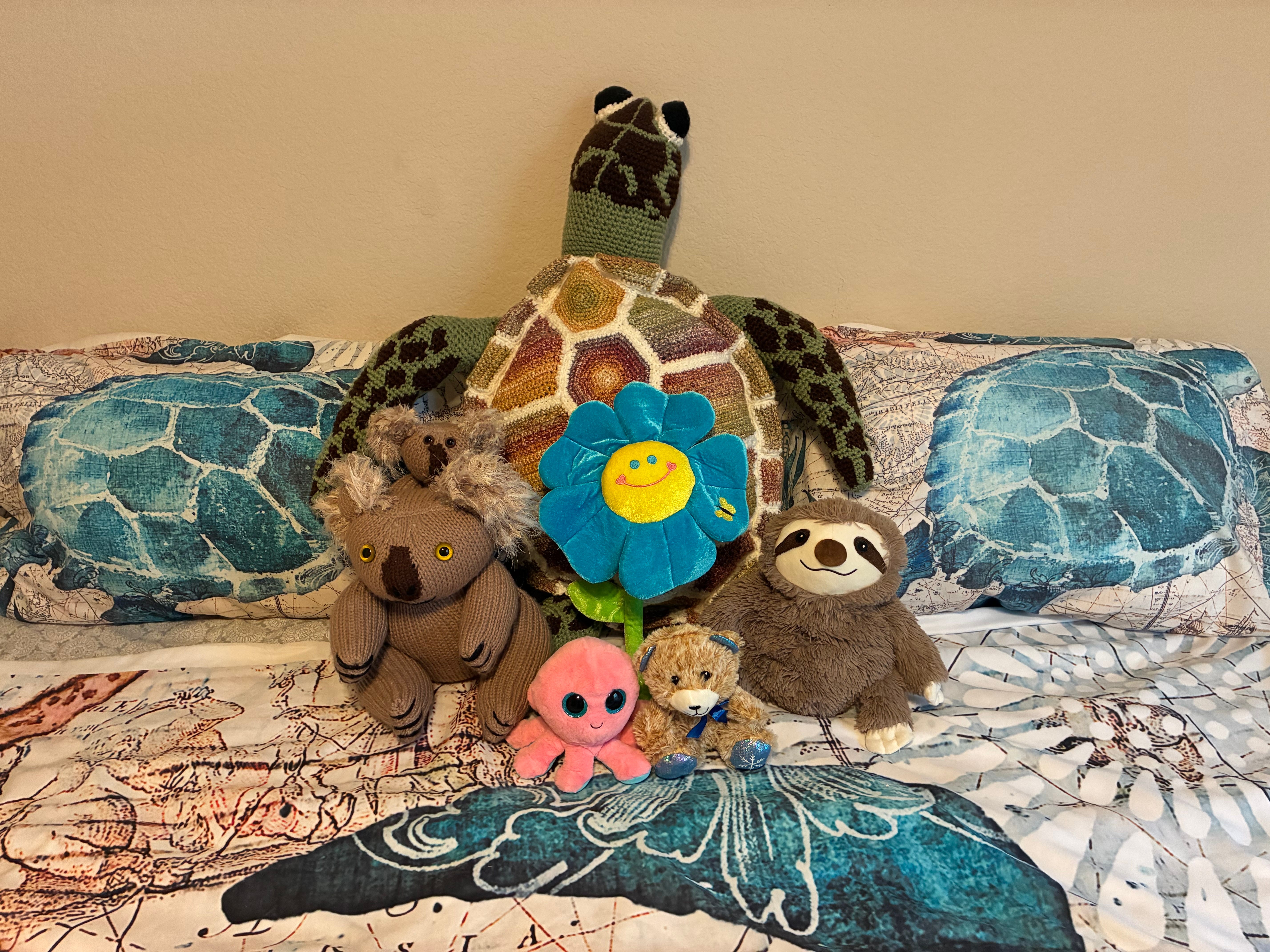
What if we asked, “Where do you work?” instead of “Where do you play?” when we first meet someone? I imagine our conversations would be far more interesting!
I would answer that I play with my stuffed animals in my bedroom, play in the waves at the beach, and play cards with my husband at our kitchen table.
Our culture (at least in the United States) emphasizes that our value comes from our productivity. Play is only acceptable for adults as a reward after one’s work. We are conditioned to regard play as a frivolous activity, even though it is at least as important to our wellbeing as work is.
Psychological Benefits of Play
According to an article on The Conversation's website, research shows that adults who engage in playful activities tend to:
The article goes on to note other benefits of play for adults:
Playfulness in adults is also associated with higher emotional intelligence, including stronger ability to perceive and manage emotions in social situations. Observational studies further show that adults who engage playfully are more empathetic, reciprocal and positive in their interactions with others, reinforcing social connection and belonging.
The research studies cited above indicate the importance of play to our wellbeing. Yet society (at least in the United States) emphasizes productivity over play. We are taught that responsible adults work as hard and often as necessary to financially support themselves. Play is only acceptable after one’s work is done, and even then it is often considered frivolous rather than essential.
So how can we incorporate more play into our lives? To answer that, we first need to understand what play is.
Definitions of Play
One definition of play is “the predisposition to frame (or reframe) a situation in such a way as to provide oneself (and possibly others) with amusement, humor, and/or entertainment.” Others, from a study of 837 adults who were asked open-ended questions about play and playfulness, include:
an organized activity, hobby, or sport
humor and laughter
to have fun enjoying activities that
bring you joy
What one person defines as play may be considered work by another. For example, many people enjoy gardening. To me, gardening is work, not play. The reverse is also true: I have a 300+ song playlist of Bruce Springsteen songs that I happily listen to for hours, but many people would not find it fun to do so.
Regardless of what play means to you, how can you incorporate more of it into your life?
Simple Ways To Add Play To Your Day
It’s easy for play to be less of a priority than work-related tasks. But it’s also easy to find creative ways to build play into your schedule. Here are some ways that I do it:
I listen to Bruce Springsteen music while washing the dishes
I play with my stuffed animals when I go to bed at night
I walk in a local park (or watch nature shows when the weather’s bad)
Other options to consider include blocking off time on your calendar for a specific activity you enjoy (like gardening, painting, or knitting); making plans with a friend to play sports or a card game, see a movie, or do whatever is fun for you; playing with a pet; and reading a book or watching a favorite show.
The possibilities are endless. If you want to add play to your day, you’ll find a way to. And once you experience the benefits listed above, you’ll probably decide to play more often. I’ve done that, and it has definitely improved my mental health!